How can we help?
888-283-1722
Call us now at 888-283-1722
24/7 Referrals and Nursing Support
Voices of Care Blog

Social Work Interns Share Insights from Their Hospice Experience
Posted on March 13, 2026 by Shaun NevilleWhen many people picture a hospice team, they may think of nurses, doctors, and home health aides. But for patients and families navigating one of the most difficult transitions of their lives, social workers are a critical part of the care team, providing emotional support, advocacy, and a steady presence when it's needed most.
At Care Dimensions, a social worker internship program places graduate students alongside experienced clinicians, and interns move quickly from observation to managing their own patient caseloads.
"With guidance from seasoned mentors, our interns get exposure to various facets of social work practice in healthcare that builds their skills, confidence, and compassion,” said Blair Smith, Social Work Coordinator. “The social work staff who dedicate their time and expertise to make this possible are invaluable, and the positive experience they create encourages interns to stay in the field of end-of-life care, often right here at Care Dimensions."
For National Social Work Month, three social work interns – all graduate students at Salem State University – agreed to be interviewed about their experiences. They share what brought them to Care Dimensions, what has stayed with them, and what they'd want the public to understand about hospice care. Here's what they had to say.
Q: How did you get into social work, and what drew you to this field?
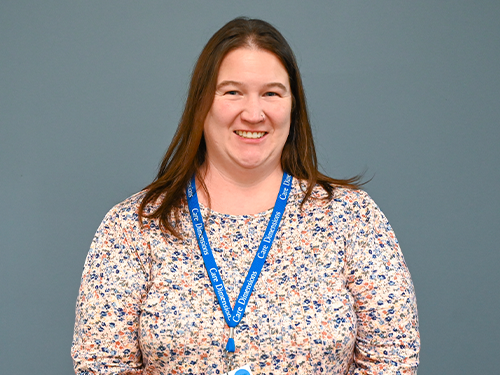 Lydia Quinn: I'm a career changer. I started off in teaching, but it just didn't pan out. I knew I wanted to stay in a helping profession. Something connected with social work in a way that teaching didn't, and I stuck with it. I had a professor who was really passionate about working with older adults – and that led me to hospice.
Nicole Bassett: My mother works in a hospital. When I was about to graduate high school, I knew I liked working with people but had no idea what I wanted to do. I went to shadow her one day, talked with some of the social workers, followed them around, and thought, “this is it.” I love that human connection and working one-on-one with people.
Evan Adler: My mother was on hospice in her final week, and the clarity and grace that the team brought not just to her, but to all of us, was my first real "I should be doing this" moment. She died peacefully at home, surrounded by love. I call hospice an excruciating gift to give to a loved one. A year later my father passed, and I knew then that I needed to go back to school and earn a graduate degree so I could work in end-of-life care.
Q: Is there a story or a patient that has stayed with you during your time here?
Lydia: There are these moments when a patient just lets us in a little bit. I was once with a spiritual counselor and the patient was lethargic, not really alert or engaged. Then gospel music came on and she started tapping her foot. You could just see this moment happen, this ability to reach her. Maybe it's only two minutes of the whole visit, but we don't know what that does for them for the rest of their day. There's a powerfulness to it that I'm not sure I can adequately describe.
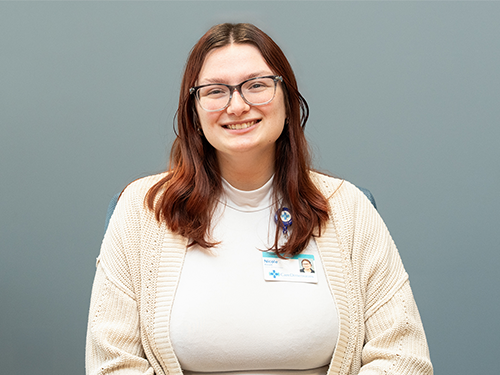 Nicole: There was one woman whose husband had recently passed away while on our services, and it was her first birthday alone. The whole team – the nurse, the spiritual counselor, and myself – we all got together. She loved vanilla ice cream, so we had a little celebration with her. She was just so happy to be the center of attention and to have that TLC. If you go into hospice just trying to tick all the boxes, you're not going to get that human connection that is really pivotal for this role.
Evan: The people who stick out the most are the ones where we were able to bring a family together. No matter the challenges within their dynamics, being able to help people set things aside and understand the process – to see the greater good – that's what has stayed with me the most.
Q: What would you want someone to know about hospice who maybe doesn't have much experience with it?
Lydia: As a society, we just don't talk about death and dying. I was at a funeral once and the eulogy said something like, "Our mom welcomed death as a friend. She knew it was coming, and she was on hospice." I think that sums up the ideal version of what hospice is. We're not fixing anything. We're just trying to keep you comfortable and welcome death as a friend. A friend isn't something scary. It's comforting support while you cross that bridge.
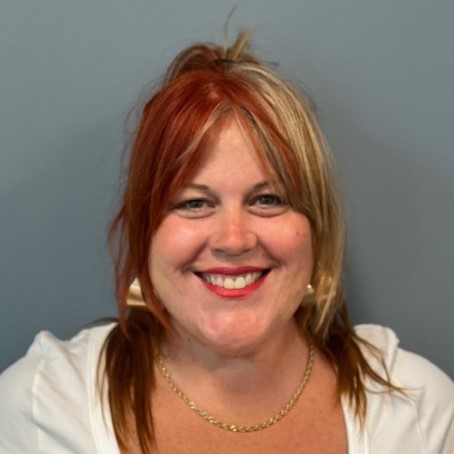
Nicole: When I first looked into this internship, I thought I might struggle with the emotions and that it would feel sad. But working with these people, it doesn't feel that way at all. I love going in and sitting with them, even on the tough days. They might be sleeping, unable to acknowledge the world around them, but just sitting with them for ten minutes, really acknowledging them… it's really special.
Evan: The biggest word I can attribute to hospice is grace. It is not the kiss of death. In people's final chapter, they can have quality of life. A lot of people are so afraid of hospice because they think it's where people go to die, but it's much more than that. It's caring for your loved one to make sure they have a peaceful end of life.
According to the U.S. Bureau of Labor Statistics, employment for medical social workers is expected to grow 10-11% between 2023 and 2033, driven in part by an aging population and increasing demand for hospice and palliative care.
To learn more about the social work internship program, please contact [email protected]. Current job openings can be found at CareDimensions.org/Jobs.
Additional Posts
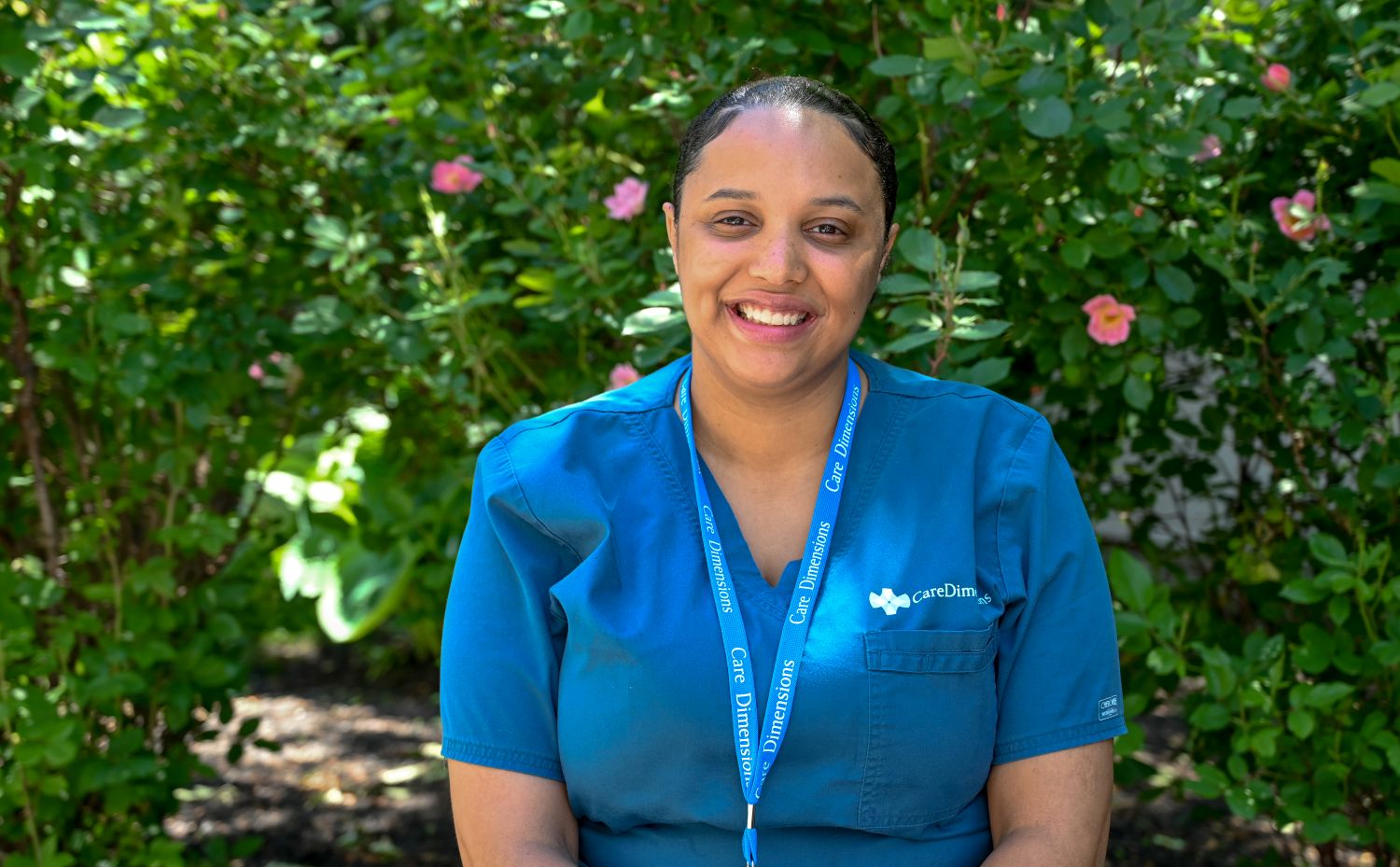
More Than a Visit: How Hospice Aides Care for the Whole Family
Posted on June 11, 2026 by Shaun Neville in Hospice, Hospice careersHospice Aide Keyanni Darling reflects on what makes her job so special, and how she and her colleagues work together to support patients and families. ...
Continue reading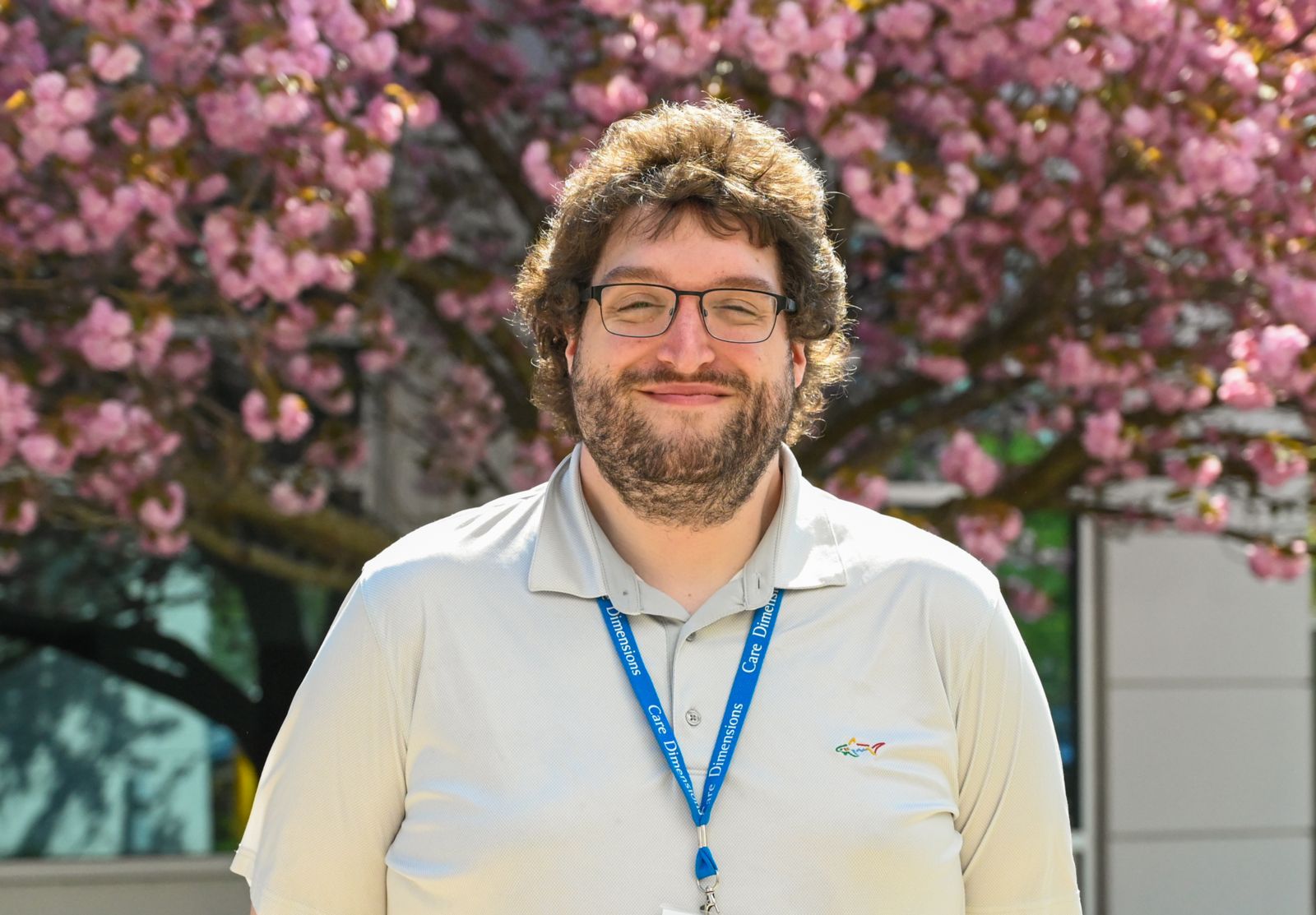
Hospice Nursing: Comfort, Connections… and the Beatles
Posted on May 8, 2026 by Shaun Neville in Hospice careersHospice nurse John DeBassio says making one-on-one connections is what his job is all about. ...
Continue reading
Not All Spiritual Care Involves Prayer – Sometimes It's About Popcorn
Posted on October 19, 2025 by Stephen Thompson Kohut, Spiritual Counselor in Hospice, Hospice careersNot everyone is religious, but Steve Kohut believes most people are spiritual. That's where his role as a hospice spiritual counselor comes in. ...
Continue readingAnyone—patient, family, care provider—can make a referral. Fill in the form online or call us today.


Since 1978, Care Dimensions, formerly Hospice of the North Shore, has provided comprehensive and compassionate care for individuals and families dealing with life-threatening illnesses. As the non-profit leader in advanced illness care, we offer services in over 100 communities in Massachusetts.
Copyright 2026 | Care Dimensions, 75 Sylvan Street, Suite B-102, Danvers, MA 01923 | 888-283-1722 | 978-774-7566 |