How can we help?
888-283-1722
Call us now at 888-283-1722
24/7 Referrals and Nursing Support
Hospice or Palliative Care?
Understanding the Differences
Palliative care and hospice care both aim to provide comfort, relieve pain and symptoms, and improve quality of life. Here are some key differences and similarities between the two.
|
|
Palliative care |
Hospice care |
|
Who is it for? |
For anyone living with a serious or chronic illness. |
For anyone with a prognosis of six months or less to live if the illness takes its course. |
|
What does it involve? |
Helps patients live as independently as possible through:
Palliative care centers on each patient's goals and quality of life. It can be provided alongside curative or life-prolonging treatment. |
Helps patients and families meet their unique end-of-life goals through:
Available to people who are no longer seeking curative treatment. |
|
How long is care provided? |
Palliative care is offered to patients with advancing symptoms over a period of several months to a year. During this time, the care team helps manage pain and other symptoms, supports independence, and keeps patients as comfortable and active as possible. |
While hospice is for people with a prognosis of six months or less, the length of care varies. Some patients may only need hospice for a few days, while others may remain on hospice for several months. There is no automatic time limit once someone is on hospice. Care can continue beyond six months as long as the patient continues to meet eligibility criteria. |
|
Where is care provided? |
Our team visits patients wherever they call home, including a house, an assisted living community, a skilled nursing facility, or a hospital. Care is delivered through a blend of virtual and in-person visits, allowing our team to provide timely support and to stay connected to patients and families. |
Our team visits patients wherever they call home, including a house, an assisted living community, a skilled nursing facility, or a hospital. Additionally, our two hospice houses are available for patients who need a higher level of attention or support. |
|
Who is on the care team? |
A dedicated team includes a physician, nurse practitioner, nurse, and social worker focused on your comfort and goals. |
An interdisciplinary care team includes hospice physician, nurse case manager, hospice aide, social workers, spiritual counselor, bereavement counselor, and trained volunteers. |
|
What if my care plan changes? |
Palliative care is offered as a layer of added support on top of existing healthcare providers. If your symptoms are well managed, you may no longer need active palliative care. As your serious illness progresses, some patients may transition to hospice. We will help guide you and your family through this transition, ensuring it aligns with your goals. |
Hospice is not necessarily a final choice. If a patient decides to once again pursue curative treatments, they can leave hospice and seek the care they want. If, at a later date, they want to return to hospice, they can. |
|
How are costs covered? |
Covered by Medicare B, Medicaid and most private insurance. |
Covered for most patients by Medicare A, Medicaid and most private insurance. |
Additional Options
In addition to hospice and palliative care, we offer two additional services that may be helpful to individuals and families facing a serious illness:
- HomeMD in-home primary care ensures individuals who have difficulty leaving their homes benefit from personalized medical care in the comfort of their own homes. Ideal for older adults who may be physically frail, suffer from memory loss, or are managing chronic conditions. Learn more.
- Dementia GUIDE is a specialized program for individuals living with mild, moderate, or advanced dementia and their caregivers. It offers guidance, education, care navigation, and ongoing support to help families navigate the dementia journey. Learn more.
Taking the Next Steps
When you’re ready to talk further about hospice or palliative care – or if you still have questions about which is right for you – give us a call. A conversation can bring clarity. Our team is trained to help you find the right path for your specific needs.
Call 888-283-1722 to learn more or fill out our online request for services form.
Stories View more Care Dimensions Stories
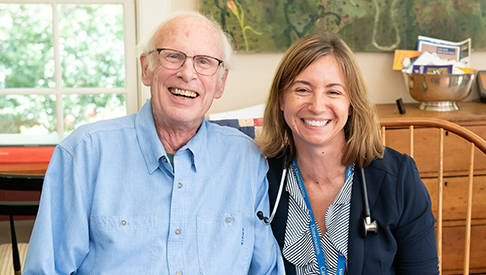
After being diagnosed with cancer of the tissue lining the abdomen, Steve turned to Care Dimensions for palliative care to manage his symptoms and help him live the way he wanted while dealing with a serious illness.
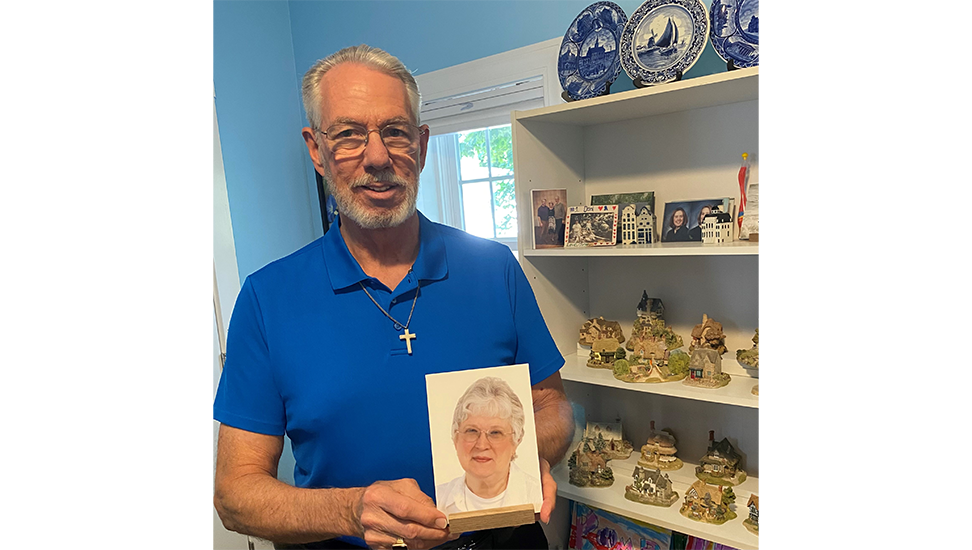
When Rev. Lee Riggs understood his wife Lynn’s symptoms were progressing rapidly, he didn’t know how much more medical care she would need, "but I knew it was time to call Care Dimensions. The support is there if you ask for it and it can make a tough time so much easier.”
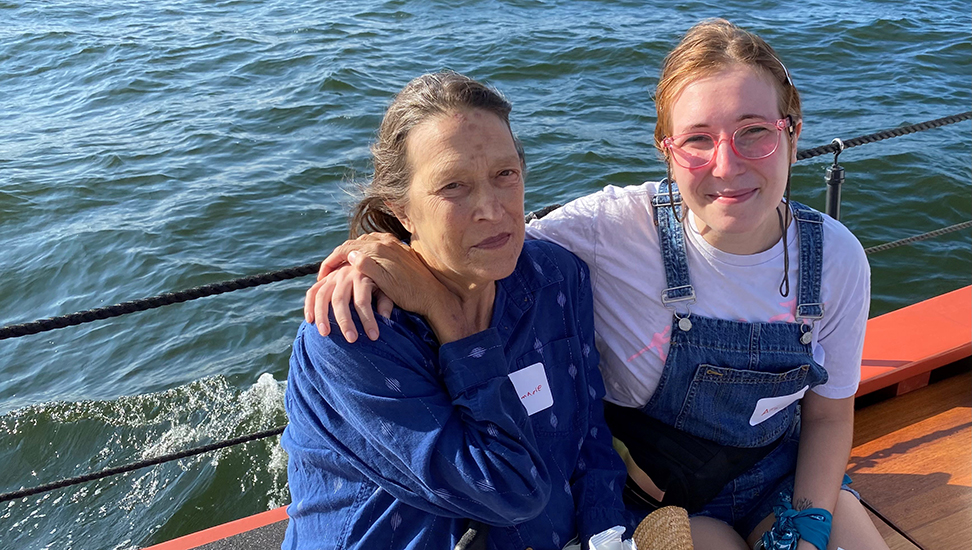
Palliative care offers a much-needed layer of assistance to patients and families that can reduce hospitalizations and emergency room visits by better managing symptoms at home.

The Care Dimensions hospice team has cared for Jim Wilson, diagnosed with Alzheimer’s disease in 2013, and supported his family with in-person and virtual supports and dealing with their grief.
Publications Find more Publications

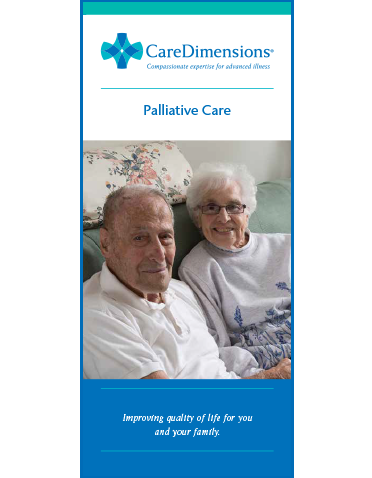
Anyone—patient, family, care provider—can make a referral. Fill in the form online or call us today.


Since 1978, Care Dimensions, formerly Hospice of the North Shore, has provided comprehensive and compassionate care for individuals and families dealing with life-threatening illnesses. As the non-profit leader in advanced illness care, we offer services in over 100 communities in Massachusetts.
Copyright 2026 | Care Dimensions, 75 Sylvan Street, Suite B-102, Danvers, MA 01923 | 888-283-1722 | 978-774-7566 |